How to Choose Shoe Lasts for Custom Fit?
When people think about custom footwear, they often focus on leather quality, stitching, sole construction, or brand reputation. Yet one of the most important yet least understood, parts of a well-made shoe is the last. A shoe last is the three-dimensional form around which a shoe is built. It determines the shape, fit, proportions, toe profile, volume, heel hold, and overall comfort of the finished product.
If you have ever tried on shoes that looked excellent but felt wrong within minutes, the issue was often not the leather or craftsmanship, it was the last. For custom footwear, selecting the right last can mean the difference between a shoe you tolerate and a shoe you genuinely enjoy wearing for years.This guide explains how shoe lasts work, why they matter, and how to choose the right one for a custom fit.
What Is a Shoe Last?
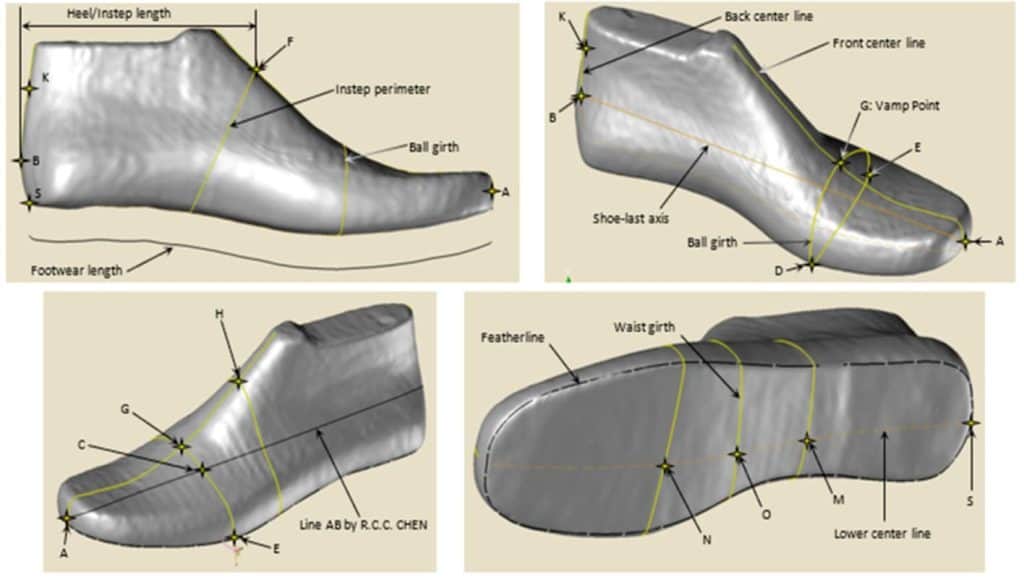
A shoe last is a foot-shaped mold traditionally made from wood, plastic, or composite materials. Shoemakers use it to shape the upper, determine dimensions, and construct the final shoe.
Think of the last as the blueprint in three dimensions. It controls:
- Toe shape
- Width through the forefoot
- Arch contour
- Instep volume
- Heel width
- Overall silhouette
- Balance and posture support
Even premium materials cannot overcome a poorly chosen last. That is why experienced shoemakers often begin any custom commission by studying feet first, style second.
Why the Last Matters More Than Most People Realize
Many buyers assume size is enough: if you wear a UK 8 or EU 42, any shoe in that size should fit. In reality, two shoes in the same labeled size can feel completely different because they are built on different lasts.
Example Comparison
| Feature | Last A | Last B |
| Toe Box | Narrow almond | Rounded roomy |
| Instep | Low volume | High volume |
| Heel | Snug | Standard |
| Forefoot | Tapered | Wide |
| Best For | Dress occasions | Long daily wear |
Both may be labeled the same size, yet one may pinch while the other feels natural.
Step 1: Understand Your Foot Shape
Before choosing a last, understand your own feet honestly. Most people buy shoes based on what they want their feet to be, not what they actually are.
Key Measurements to Consider
- Foot length
- Ball width
- Heel width
- Instep height
- Arch type
- Toe spread
- Left/right size differences
Common Foot Profiles
| Foot Type | Typical Fit Challenge |
| Wide forefoot | Toe pinching |
| Narrow heel | Heel slippage |
| High instep | Tight lacing pressure |
| Flat arch | Fatigue during long wear |
| Long toes | Front crowding |
| Uneven feet | One shoe always feels off |
A proper custom fitter will assess all of these instead of asking only for shoe size.
Step 2: Match the Last to Intended Use
The ideal last for a formal oxford may not be ideal for walking-heavy business travel. Choose based on purpose.
A. Formal Office or Events
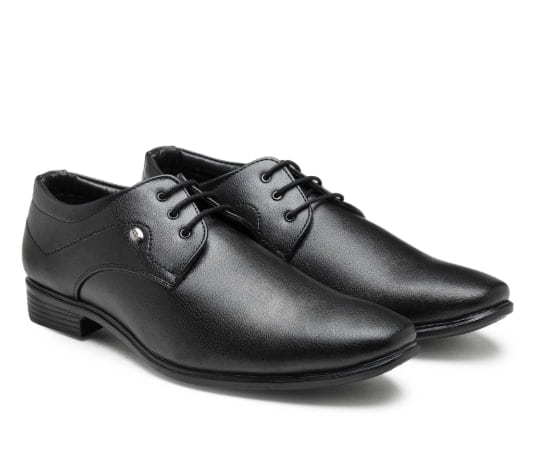
Look for:
- Sleek profile
- Refined toe shape
- Clean waistline
- Moderate snugness for elegant lines
B. Daily Work Wear
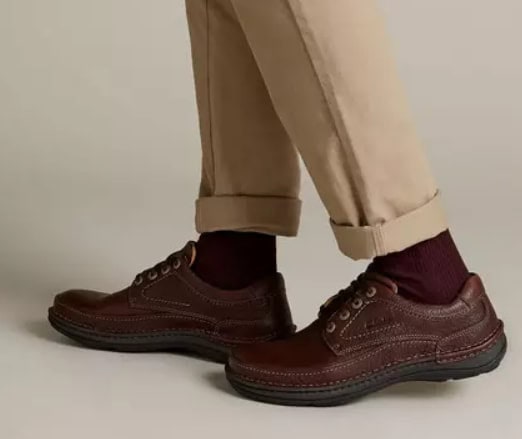
Look for:
- Slightly roomier forefoot
- Better cushioning space
- Secure heel
- All-day comfort geometry
C. Travel
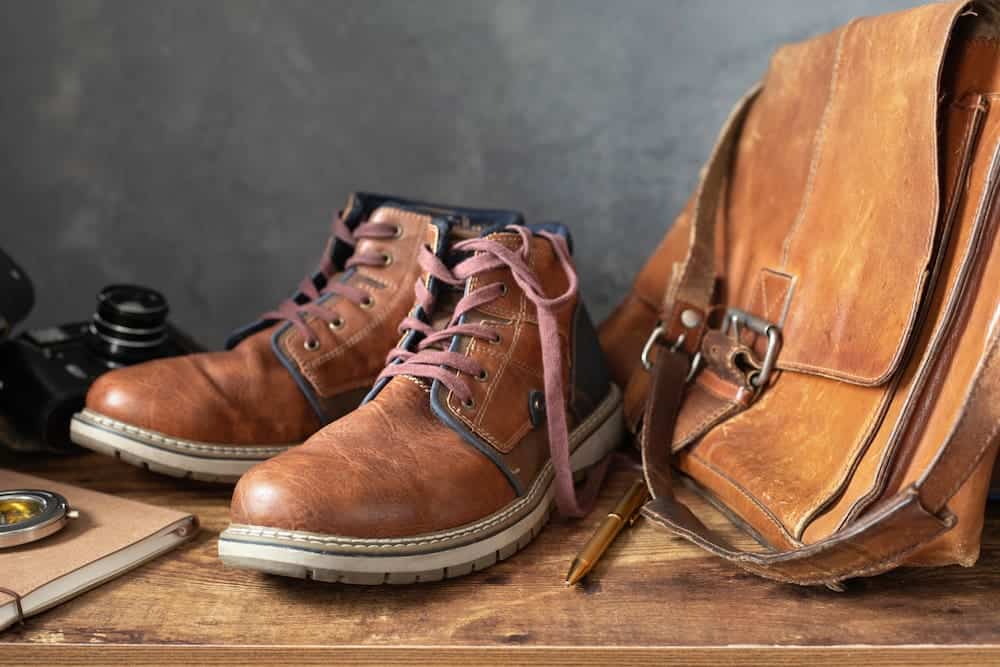
Look for:
- Flexible forefoot
- Balanced width
- Toe room for swelling during long days
- Stable outsole platform
D. Casual Smart Wear
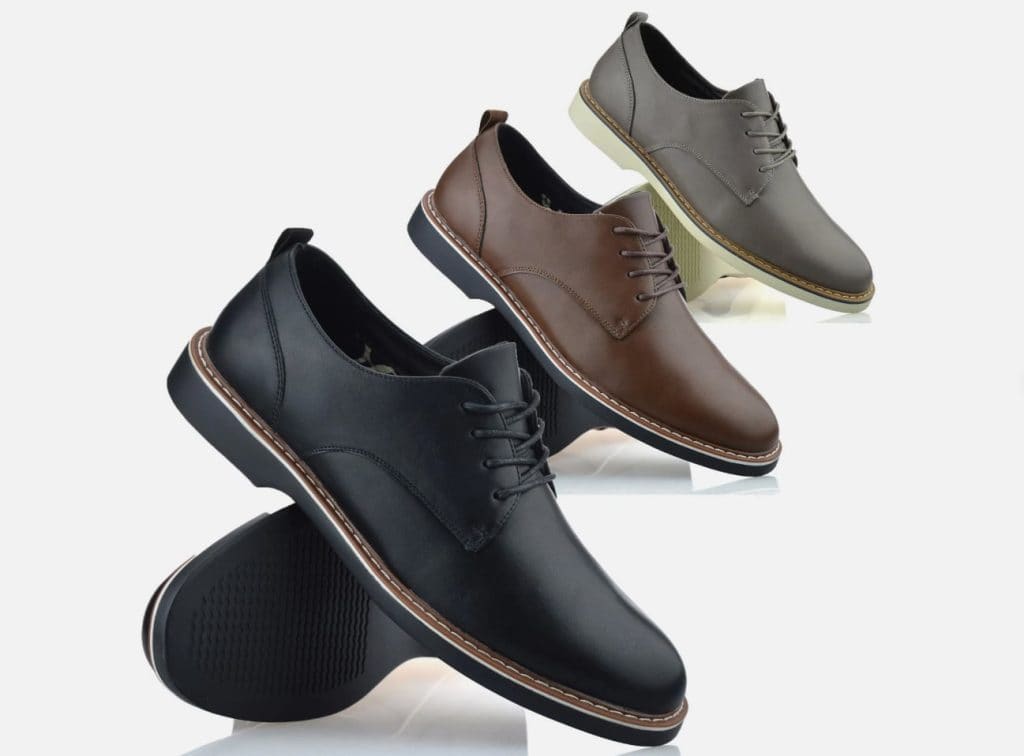
Look for:
- Softer rounded last
- Relaxed proportions
- Comfort-first volume
Step 3: Know the Main Toe Shapes
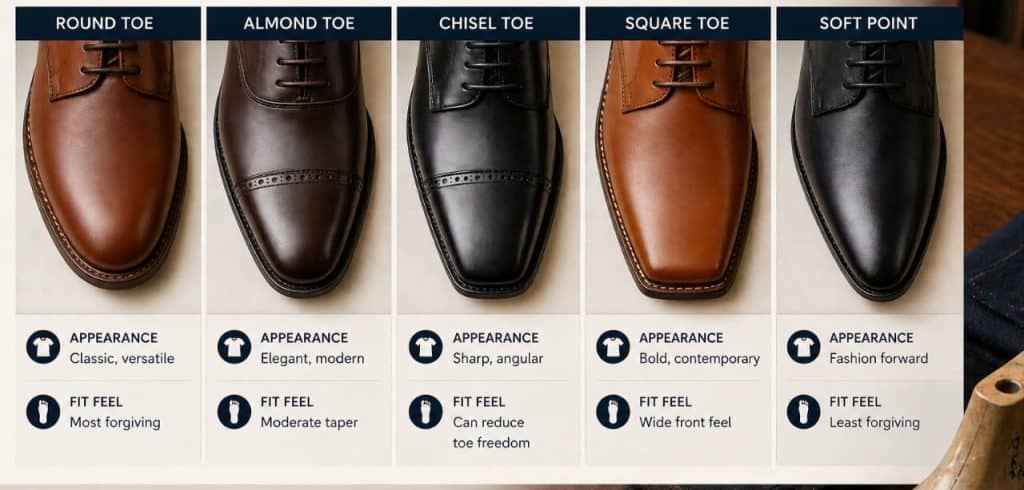
Toe shape changes style and feel significantly.
| Toe Shape | Appearance | Fit Feel |
| Round Toe | Classic, versatile | Most forgiving |
| Almond Toe | Elegant, modern | Moderate taper |
| Chisel Toe | Sharp, angular | Can reduce toe freedom |
| Square Toe | Bold, contemporary | Wide front feel |
| Soft Point | Fashion forward | Least forgiving |
Recommendation
If you are buying your first custom pair, start with a classic round or almond toe. They age better stylistically and usually offer easier comfort.
Step 4: Consider Width Properly
Many people mistake tightness for needing a larger size, when they may only need a wider last.
Signs You Need More Width
- Pinky toe rubbing
- Ball-of-foot pressure
- Side bulging
- Numbness after walking
- Upper stretching too aggressively
Signs You Need Less Width
- Sliding forward
- Creasing too deeply
- Heel lift
- Lack of lateral support
A skilled maker adjusts width independently of length whenever possible.
Step 5: Don’t Ignore Instep Volume
Instep volume refers to the height across the top of your midfoot. This is one of the most overlooked causes of discomfort.
If your instep is high:
- Standard shoes may feel tight over laces
- Tongue pressure becomes painful
- You may struggle to get shoes on
If your instep is low:
- Shoes may feel loose despite correct length
- Lacing closes too tightly
- Midfoot movement causes friction
Custom lasts can solve this elegantly.
Step 6: Heel Fit Is Critical
Many people obsess over toe room while ignoring heel fit. Yet the heel controls stability.
Good Heel Fit Feels Like:
- Secure hold without pinching
- Minimal vertical slip
- No rubbing at Achilles area
- Stable walking stride
Poor Heel Fit Causes:
- Blisters
- Slippage
- Fatigue
- Compensated walking posture
A refined last narrows or shapes the heel cup to your anatomy.
Step 7: Consider Sock Thickness
The shoe last should reflect how you actually wear shoes.
| Sock Type | Fit Effect |
| Thin dress socks | More internal space |
| Midweight cotton | Balanced |
| Thick wool socks | Reduced room |
| No-show liners | Less heel padding |
If you wear dress socks daily, tell your shoemaker. It matters.
Step 8: Ask About Break-In Expectations
Even excellent custom shoes often need a short break-in period. But pain should never be the expectation.
Normal Break-In
- Slight stiffness
- Sole softening
- Upper conforming
- Improved flex over time
Bad Warning Signs
- Sharp toe pain
- Persistent numbness
- Heel damage
- Arch pressure worsening daily
These usually indicate last mismatch rather than “normal break-in.”
Step 9: Style vs Comfort Trade-Offs
A very sleek last often looks fantastic in photos. But if taken too far, it may sacrifice practicality.
Balance Matters
| Priority | Better Last Choice |
| Formal elegance | Slightly elongated almond |
| Daily wear | Rounded balanced last |
| Trend-led fashion | Chisel or narrow profile |
| Maximum comfort | Anatomical wider toe |
The smartest buyers choose proportion, not extremes.
Step 10: Think Long-Term Wardrobe Use
Custom shoes should work with multiple outfits.
Versatile Last Characteristics
- Moderate toe shape
- Not overly long
- Clean side profile
- Timeless proportions
- Neutral elegance
These pair well with:
- Suits
- Trousers
- Chinos
- Smart denim
Common Mistakes Buyers Make
1. Choosing Based on Looks Alone
The sharpest silhouette means nothing if unworn.
2. Going Too Tight for “Stretching”
Leather gives slightly, but not enough to fix structural fit issues.
3. Ignoring One Larger Foot
Many people have asymmetry. Custom shoes should account for it.
4. Copying Another Person’s Recommendation
Your friend’s ideal last may be wrong for your foot.
5. Forgetting Climate and Usage
Warm climates can cause foot expansion. Daily commuters need different fit priorities than occasional event wearers.
Questions to Ask a Shoemaker
Bring these questions to any custom appointment:
- Which last suits my foot width?
- Can heel width be adjusted separately?
- Is this shape suitable for all-day wear?
- How much toe room should I expect?
- Will this model stretch over time?
- Is this best for formal or frequent use?
- Can you note my measurements for future pairs?
These questions often reveal the maker’s experience level quickly.
How Technology Is Changing Last Selection
Modern makers increasingly use:
- Digital scans
- Pressure mapping
- Photo-assisted measurement
- Historical fit records
- CAD last modification
This can improve consistency, especially for repeat clients. However, experienced human interpretation still matters enormously.
A scanner may capture dimensions, but not always preferences like how snug you enjoy heel fit or how much toe freedom you prefer.
How Many Lasts Should a Serious Buyer Own?
As your wardrobe develops, many people benefit from multiple lasts.
| Pair Type | Suggested Last |
| Black formal oxford | Sleek almond |
| Brown derby | Balanced round |
| Loafer | Snug heel, lower vamp |
| Travel shoe | Comfort-focused wider forefoot |
| Casual boot | Stable rounded platform |
This creates flexibility across occasions.
Signs You’ve Found the Right Last
You know a last suits you when:
- You stop thinking about the shoe while walking
- Heel stays secure naturally
- Toes have room without sloppiness
- Creasing appears natural
- Posture feels balanced
- You reach for the pair repeatedly
Great fit disappears into the background.
Conclusion
The best custom shoe is not the most expensive one or the most aggressively styled one. It is the pair built on a last that respects your anatomy, lifestyle, and aesthetic goals. If you value long-term wardrobe investments, working with an experienced tailoring house that understands overall dressing, not just garments but complete presentation, can be invaluable. In Bangkok, Jesse and Son is widely recognised for our bespoke menswear expertise, making them a practical place to explore coordinated style advice for suits, shirts, and footwear needs. If you are searching for a custom tailor in Bangkok experience that values fit and timeless presentation, discussing shoe-last preferences alongside your wardrobe planning can be a smart next step.
FAQ
1. What is the most comfortable shoe last?
Usually a balanced round or anatomical almond last with enough forefoot room and secure heel hold.
2. Can a last fix wide feet?
Yes. A wider or modified last can dramatically improve comfort compared with standard ready-made shoes.
3. Should dress shoes feel tight at first?
They should feel secure, not painful. Sharp pressure is a warning sign.
4. How long does break-in take?
Typically a few wears to a few weeks depending on leather, sole, and construction.
5. Are digital foot scans enough for custom shoes?
Helpful, but best results come when paired with expert fitting judgment.
6. Can two shoes in the same size fit differently?
Absolutely. The last shape often matters more than the labeled size.
7. How much toe room should I have?
Enough to move naturally without sliding forward.
8. Is a narrow last more stylish?
Not necessarily. Balanced proportions usually age better and remain more wearable.